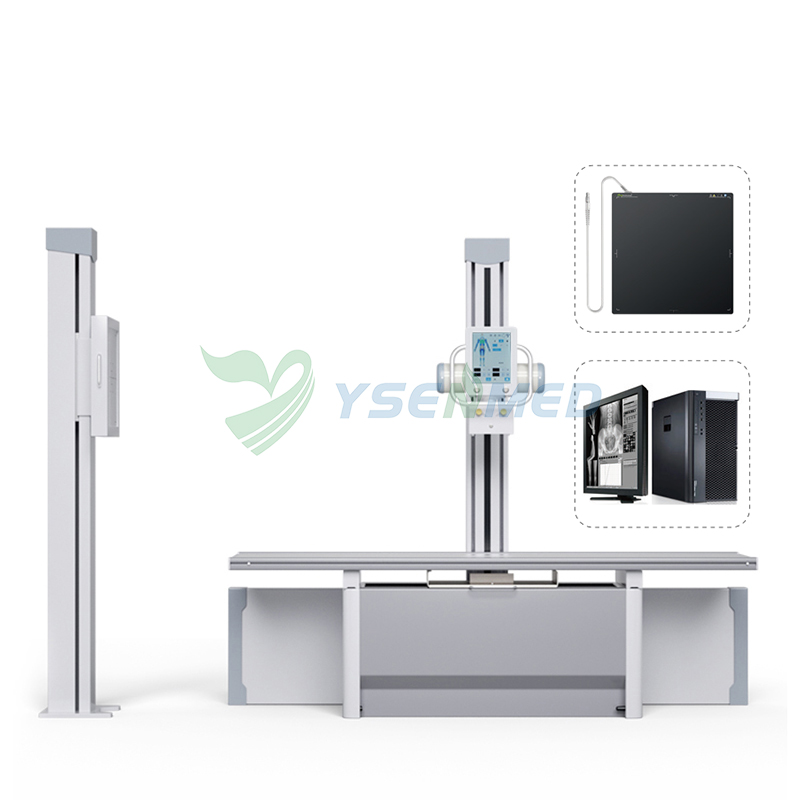
The Importance of Quality X-Ray Machines in Medical Diagnostics
In the realm of medical diagnostics, one of the most indispensable tools is the X-ray machine. From emergency rooms to specialized diagnostic centers, X-ray technology has long been at the forefront of helping healthcare professionals diagnose and treat a wide array of medical conditions. Whether it's evaluating bone fractures, detecting lung diseases, or identifying potential tumors, X-ray machines play a pivotal role in providing real-time, non-invasive imaging for a variety of diagnostic purposes.
As advancements in medical technology continue to evolve, the demand for high-quality X-ray machines for sale has grown significantly. Healthcare providers are increasingly seeking reliable, durable, and cutting-edge X-ray systems to enhance the accuracy and efficiency of their diagnostic processes. In this article, we will explore the importance of quality X-ray machines in medical diagnostics, focusing on their role in improving patient care, streamlining workflows, and supporting better medical decision-making.
We will also discuss the key features to consider when purchasing an
X-ray machine for sale, the different types of X-ray machines available, and the importance of investing in high-quality, up-to-date systems for healthcare settings.
Understanding X-Ray Machines
An X-ray machine is a medical imaging device that uses X-rays— a form of electromagnetic radiation— to create images of the inside of the body. These images, known as radiographs, allow healthcare professionals to see the structure and condition of bones, organs, and soft tissues, which can be crucial for diagnosing a wide range of conditions.
How X-Ray Machines Work
X-ray machines operate by emitting a controlled amount of X-ray radiation through the body. As the radiation passes through tissues, it is absorbed at different rates depending on the density and composition of the tissues. Dense materials, such as bones, absorb more radiation and appear white on the X-ray image. Softer tissues, such as muscles or organs, absorb less radiation and appear darker on the image.
The X-ray machine consists of a tube that emits the radiation, a detector that captures the transmitted radiation, and a computer system that processes the data into an image. The resulting radiograph is then reviewed by a radiologist or medical professional to identify abnormalities or signs of disease.
Types of X-Ray Machines
There are several types of X-ray machines used in medical diagnostics, each suited for different applications and clinical needs:
Stationary X-Ray Machines: These are traditional, large-scale X-ray systems typically used in hospitals and diagnostic imaging centers. They consist of a fixed table or platform for patients to lie on, along with a movable arm and tube for precise positioning. These machines are capable of producing high-quality images with a variety of imaging modalities.
Portable X-Ray Machines: Portable X-ray machines are smaller and more mobile than stationary systems, allowing healthcare providers to take them to the patient rather than requiring the patient to come to the machine. These are particularly useful in emergency rooms, intensive care units (ICUs), and remote or rural healthcare settings.
Digital X-Ray Machines: Digital X-ray systems have replaced traditional film-based systems in many settings. They offer faster imaging, improved image quality, and the ability to instantly view and manipulate images on a computer screen. Digital X-rays are also easier to store and share, improving workflow and collaboration among healthcare professionals.
Fluoroscopy Machines: These X-ray machines provide real-time imaging, allowing doctors to observe the movement of internal structures, such as the digestive system or blood flow. Fluoroscopy is commonly used in procedures like barium swallow tests, catheter insertion, and joint injections.
Mammography Machines: Specialized X-ray machines are used for breast cancer screening. Mammography machines use a higher resolution X-ray to capture detailed images of breast tissue, which can help detect early signs of breast cancer.
The Role of X-Ray Machines in Medical Diagnostics
1. Diagnosis of Bone Fractures and Skeletal Conditions
One of the primary uses of X-ray technology is the diagnosis of bone fractures and musculoskeletal conditions. X-ray machines provide detailed images of the skeletal system, making them essential for identifying broken bones, joint dislocations, and conditions such as arthritis, osteoporosis, and bone infections.
In emergency rooms, orthopedic clinics, and urgent care centers, X-ray machines are used as the first line of diagnostic imaging for patients presenting with trauma or complaints of pain in the bones or joints. Quick access to accurate imaging enables healthcare providers to make timely treatment decisions, such as whether a fracture requires casting, surgery, or further evaluation.
2. Detection of Lung Diseases
X-ray machines are widely used for detecting lung conditions, including pneumonia, tuberculosis, lung cancer, and chronic obstructive pulmonary disease (COPD). A chest X-ray is often the first imaging technique used to assess patients with respiratory symptoms such as shortness of breath, coughing, or chest pain.
In cases of suspected lung infections or abnormalities, a chest X-ray can provide immediate insights into the condition of the lungs, allowing healthcare providers to determine the appropriate course of action, whether it be medication, further imaging, or referral to a pulmonologist.
3. Cancer Screening and Detection
X-ray technology is also used in cancer detection, particularly for screening and diagnosing conditions like breast cancer, lung cancer, and certain types of gastrointestinal cancers. Mammography, for example, is an X-ray-based imaging technique used to detect early-stage breast cancer before symptoms appear. Similarly, CT (computed tomography) scans, which are a type of advanced X-ray imaging, are often used to detect and monitor tumors in the body.
Early detection of cancer through regular screening and imaging can significantly improve the chances of successful treatment and outcomes. As a result, investing in high-quality X-ray machines that can produce clear and accurate images is essential in cancer diagnosis.
4. Identification of Soft Tissue Abnormalities
While X-ray imaging is best known for its ability to visualize bones, it is also useful for identifying soft tissue abnormalities. Soft tissues such as muscles, organs, and blood vessels are not as clearly visible on standard X-rays, but certain conditions, such as calcifications, infections, and tumors, can be detected through specialized X-ray techniques.
For instance, X-ray imaging can help detect conditions like kidney stones, gallstones, and soft tissue calcifications that might indicate an underlying disease or condition. The ability to detect these issues early can help guide treatment decisions and prevent complications.
5. Dental Diagnostics
X-ray machines are indispensable in dentistry for diagnosing dental conditions, such as cavities, infections, and tooth decay. Dental X-rays, including bitewing X-rays and panoramic X-rays, allow dentists to examine teeth and jaw structures in detail, helping them plan treatments for restorative procedures, orthodontics, or surgical interventions.
Dental practices typically invest in high-quality X-ray machines to ensure accurate imaging and better patient care. The ability to take clear, detailed dental X-rays also enables dentists to detect problems early, often before they become symptomatic.
The Advantages of High-Quality X-Ray Machines
1. Improved Diagnostic Accuracy
The primary advantage of using high-quality X-ray machines is their ability to produce clear, detailed images that enhance diagnostic accuracy. Poor-quality X-ray images may be difficult to interpret and could lead to misdiagnosis or delayed treatment. On the other hand, high-resolution X-ray machines offer sharper contrast, better image clarity, and more accurate results, allowing healthcare providers to make informed decisions quickly.
With the advancement of digital radiography, modern X-ray machines can also process images faster, enabling doctors to analyze results immediately. This is particularly crucial in emergency settings, where prompt diagnosis and treatment are essential.
2. Reduced Radiation Exposure
Modern X-ray machines are designed with advanced technology that minimizes radiation exposure to patients while maintaining image quality. This is important not only for patient safety but also for healthcare workers who are frequently exposed to radiation.
The implementation of techniques like low-dose imaging and digital radiography has significantly reduced radiation risks, making modern X-ray machines safer than ever before. By using high-quality systems that incorporate these technologies, healthcare providers can ensure optimal patient safety without sacrificing diagnostic capabilities.
3. Faster Imaging and Enhanced Workflow
High-quality X-ray machines produce faster results, which can drastically improve the workflow in healthcare settings. Traditional film-based X-ray machines required longer processing times, whereas digital systems offer instant image viewing and the ability to manipulate and enhance the images for better clarity.
The faster imaging process means less time spent on each patient, reducing wait times and allowing medical professionals to see more patients in a shorter amount of time. In busy hospitals and imaging centers, this increased efficiency can lead to a better overall patient experience and more accurate diagnoses.
4. Lower Maintenance and Longer Lifespan
Investing in a high-quality X-ray machine for sale often leads to lower maintenance costs and a longer lifespan for the equipment. Quality machines are built with durable materials and components that are designed to withstand the rigors of daily use. This reduces the likelihood of breakdowns and the need for frequent repairs, saving healthcare facilities both time and money in the long run.
Furthermore, quality machines are more likely to be compatible with software updates and new imaging technologies, ensuring that the equipment remains up to date and continues to deliver high-quality results for many years.
How to Choose the Right X-Ray Machine for Sale
When searching for an
X-ray machine for sale, healthcare providers must consider several factors to ensure they select the right system for their needs. Here are some essential aspects to take into account:
Imaging Quality: Look for machines that offer high-resolution imaging and advanced features such as digital radiography and automatic exposure control. The ability to produce clear, detailed images is paramount in accurate diagnostics.