Improving Image Quality with Flat Panel Detectors
Medical imaging is an essential component of modern healthcare. It helps doctors diagnose and treat a wide range of conditions, from broken bones to cancer. One of the most significant advancements in medical imaging technology has been the development of flat panel detectors (FPDs). FPDs are a type of digital X-ray detector that offer several advantages over traditional film-based X-rays. In this post, we'll explore how FPDs work and how they can improve image quality in medical imaging.
What are Flat Panel Detectors?
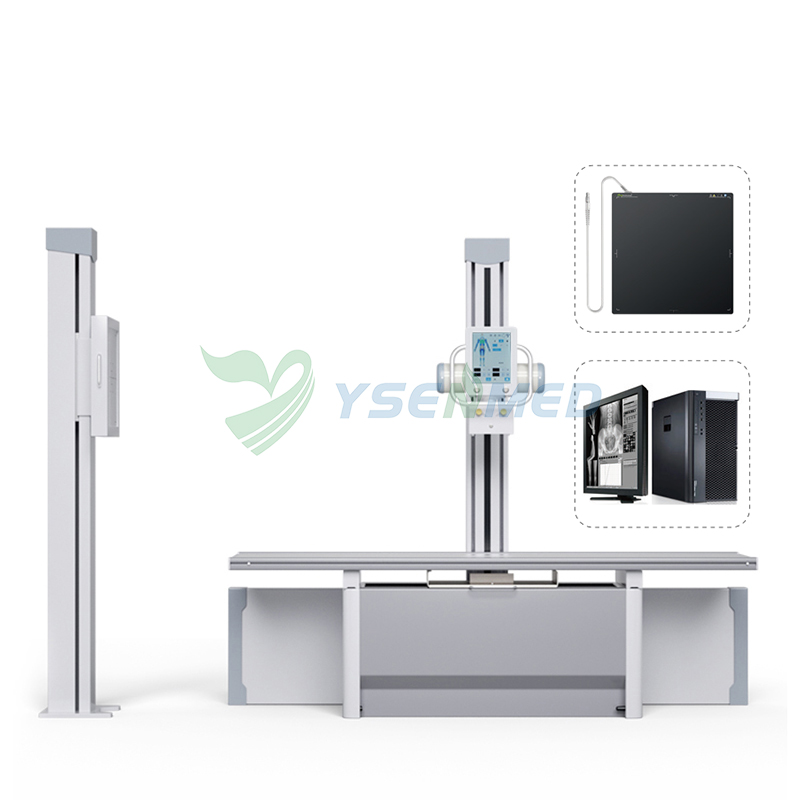
FPDs are a type of digital X-ray detector that use a flat panel to capture X-ray images. They consist of a scintillator layer that converts X-rays into visible light, and an array of photodiodes that detect the light and convert it into an electrical signal. The electrical signal is then processed by a computer to create a digital image.
There are two types of FPDs: indirect and direct. Indirect FPDs use a scintillator layer made of cesium iodide (CsI) or gadolinium oxysulfide (GOS) to convert X-rays into visible light. The light is then detected by an array of photodiodes and converted into an electrical signal. Direct FPDs use a scintillator layer made of amorphous selenium (a-Se) to convert X-rays directly into an electrical signal.
Advantages of Flat Panel Detectors
FPDs offer several advantages over traditional film-based X-rays. First, they offer higher spatial resolution, which means they can produce images with greater detail and clarity. Second, they offer a wider dynamic range, which means they can capture a broader range of X-ray intensities. This makes them ideal for imaging dense areas like bones and soft tissues.
FPDs are also faster than traditional film-based X-rays. They can produce images in seconds, whereas film-based X-rays can take several minutes to develop. This makes FPDs ideal for emergency situations where time is critical.
Finally, FPDs are more environmentally friendly than traditional film-based X-rays. They don't require chemicals for development, which means they don't produce hazardous waste.
Improving Image Quality with Flat Panel Detectors
FPDs can improve image quality in several ways. First, they offer higher spatial resolution, which means they can produce images with greater detail and clarity. This is particularly important in medical imaging, where small details can be critical for accurate diagnosis and treatment.
Second, FPDs offer a wider dynamic range, which means they can capture a broader range of X-ray intensities. This makes them ideal for imaging dense areas like bones and soft tissues. It also means that FPDs can capture more subtle variations in tissue density, which can be important for detecting early-stage cancers or other diseases.
Finally, FPDs offer greater flexibility in image processing. Because FPDs capture images digitally, the images can be easily manipulated and enhanced using software. This allows doctors to adjust the contrast and brightness of images to improve visibility and highlight specific areas of interest.
Conclusion
Flat panel detectors are a significant advancement in medical imaging technology. They offer higher spatial resolution, wider dynamic range, faster image acquisition, and greater flexibility in image processing than traditional film-based X-rays. These advantages translate into improved image quality, which can lead to more accurate diagnoses and better patient outcomes. As FPD technology continues to improve, we can expect even greater advancements in medical imaging in the years to come.
Flat panel detectors (FPDs) are used in a variety of medical imaging applications, including radiography, mammography, and fluoroscopy. They offer several advantages over traditional film-based imaging systems, including improved image quality.
One of the main ways that FPDs improve image quality is by offering higher resolution and contrast than film-based systems. FPDs use a thin layer of amorphous silicon or selenium to capture X-rays and convert them into digital signals. These digital signals can then be processed to produce high-quality images with greater detail and clarity.
FPDs also offer a wider dynamic range than film-based systems, which allows them to capture a greater range of shades of gray. This can be particularly important in medical imaging applications where subtle differences in tissue density or contrast can be critical for accurate diagnosis.
Another way that FPDs improve image quality is by reducing image noise. Image noise can be caused by a variety of factors, including X-ray scatter, patient motion, and equipment artifacts. FPDs are less susceptible to image noise than film-based systems, which can lead to clearer and more accurate images.
FPDs also offer greater flexibility in terms of image processing. Digital images captured by FPDs can be easily manipulated using software tools to adjust contrast, brightness, and other image parameters. This allows medical professionals to optimize images for specific diagnostic purposes and to enhance subtle details that might otherwise be missed.
In addition to their ability to improve image quality, FPDs also offer several other advantages over traditional film-based systems. They are faster and more efficient than film-based systems, which can help to reduce patient wait times and improve workflow in medical imaging departments. They are also more environmentally friendly than film-based systems because they do not require the use of chemicals for image development.
When choosing an FPD for medical imaging applications, it is important to consider factors such as resolution, contrast, dynamic range, and noise reduction. It is also important to choose an FPD that is compatible with existing imaging equipment and software.
Overall, flat panel detectors offer several advantages over traditional film-based imaging systems in terms of improving image quality in medical imaging applications. They offer higher resolution and contrast, a wider dynamic range, reduced image noise, and greater flexibility in image processing. As medical imaging technology continues to evolve, FPDs are likely to become even more important in the diagnosis and treatment of a wide range of medical conditions.