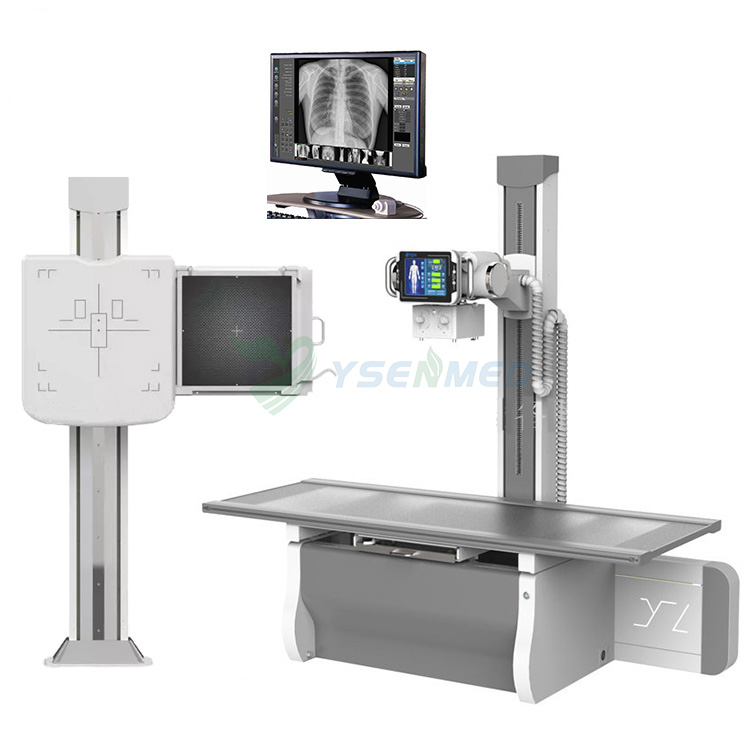
When equipping a hospital or clinic with radiology solutions, understanding the different X-ray equipment types is critical for making informed purchasing decisions. As a leading supplier, Ysenmed offers a wide range of hospital X-ray machines, including both fixed and mobile systems, to meet diverse clinical needs. This article explores the comparison of X-ray equipment types, specifically fixed and mobile systems, to help radiology room solution purchasing specialists, doctors, nurses, and private clinic administrators choose the right equipment. By examining key factors such as functionality, cost, and clinical applications, we aim to provide a comprehensive guide for selecting types of X-ray machines that align with your facility’s requirements.
Why Choosing the Right X-Ray Equipment Matters
Hospitals and clinics rely on X-ray imaging equipment types to deliver accurate diagnoses and improve patient outcomes. However, selecting the appropriate system involves balancing clinical needs, budget constraints, and operational efficiency. For instance, fixed X-ray systems are often preferred for high-volume facilities, while portable X-ray systems offer flexibility for smaller clinics or critical care settings. Ysenmed’s expertise in radiology solutions ensures that healthcare providers can find equipment tailored to their specific needs, whether for emergency rooms, intensive care units, or outpatient clinics.
Moreover, regulatory compliance, such as adhering to radiation safety standards outlined by the FDA, is essential when purchasing X-ray diagnostic equipment classifications []. Therefore, understanding the differences between fixed and mobile systems is crucial for optimizing workflow and patient care.
Fixed X-Ray Systems: Stability and Power
Overview of Fixed X-Ray Machines
Fixed X-ray systems, often referred to as stationary or floor-mounted systems, are designed for dedicated radiology rooms. These types of X-ray machines are ideal for facilities with high patient volumes and diverse diagnostic needs. Fixed systems typically include powerful generators and large X-ray tubes, enabling high-quality imaging for a wide range of procedures, including cross-table studies and imaging for larger patients [].
Key Features and Benefits
Fixed X-ray systems offer several advantages:
-
High Image Quality: Equipped with powerful transformers, fixed systems produce sharp, high-resolution images, making them suitable for complex diagnostic tasks [].
-
Versatility: With rotational X-ray tubes and adjustable tables, these systems support a broad range of procedures, from chest X-rays to orthopedic imaging [].
-
High Throughput: Fixed systems are designed for high-volume settings, such as teaching hospitals and large medical centers, where efficiency is paramount [].
However, fixed systems require significant infrastructure investments, including lead-lined rooms and high-power electrical connections (e.g., 230V AC) []. Consequently, they are less suitable for smaller facilities with limited space or budgets.
Applications of Fixed X-Ray Systems
Fixed X-ray systems are commonly used in:
-
Teaching Hospitals: Their ability to handle diverse caseloads makes them ideal for academic settings.
-
Large Clinics: Facilities with high patient throughput benefit from the efficiency and image quality of fixed systems.
-
Specialized Imaging: Procedures like fluoroscopy or angiography often require the power and stability of fixed systems [].
Ysenmed’s fixed digital radiography equipment solutions, such as floor-mounted and ceiling-mounted systems, provide healthcare providers with reliable, high-performance options for modern diagnostic needs.
Mobile X-Ray Systems: Flexibility and Accessibility
Overview of Mobile X-Ray Machines
Mobile X-ray systems, including portable X-ray systems and C-arm X-ray units, are designed for flexibility and ease of movement. These systems are mounted on wheeled carts or are battery-operated, allowing imaging at the patient’s bedside or in non-traditional settings []. Ysenmed’s mobile X-ray machines, such as the UC-5000, deliver high-quality imaging with the added benefit of portability [].
Key Features and Benefits
Mobile X-ray systems offer distinct advantages:
-
Portability: These systems can be moved between rooms or facilities, making them ideal for urgent care centers, ICUs, and nursing homes [].
-
Minimal Infrastructure Needs: Unlike fixed systems, mobile units require little to no construction, such as lead shielding, reducing setup costs [].
-
Rapid Diagnostics: Mobile systems enable bedside imaging, which is critical for non-ambulatory patients or emergency situations [].
On the downside, mobile systems may have lower power output compared to fixed systems, potentially limiting image quality for larger patients or complex studies []. Nevertheless, advancements in digital radiography equipment have significantly improved the performance of mobile systems.
Applications of Mobile X-Ray Systems
Mobile X-ray systems are particularly valuable in:
-
Intensive Care Units (ICUs): Bedside imaging reduces the need to transport critically ill patients [].
-
Nursing Homes and Remote Settings: Mobile units provide diagnostic capabilities where fixed systems are impractical [].
-
Emergency Departments: Quick setup and imaging speed up diagnoses in time-sensitive scenarios [].
Ysenmed’s mobile X-ray diagnostic equipment classifications, such as the YSPFD-M1717V, offer wireless digital imaging solutions that enhance workflow efficiency in diverse clinical environments [].
Comparing Fixed and Mobile X-Ray Systems
To provide a clearer X-ray machine comparison, the table below outlines key differences between fixed and mobile systems based on functionality, cost, and clinical applications:
|
Feature
|
Fixed X-Ray Systems
|
Mobile X-Ray Systems
|
|
Image Quality
|
High-resolution, suitable for complex studies
|
Good, but may be limited for larger patients
|
|
Power Output
|
High (requires 230V AC)
|
Lower, often battery-operated
|
|
Infrastructure Needs
|
Dedicated room, lead shielding, high-power lines
|
Minimal, no lead shielding required
|
|
Cost
|
Higher initial and installation costs
|
Lower initial and setup costs
|
|
Mobility
|
Stationary
|
Highly portable, suitable for bedside use
|
|
Patient Volume
|
High-volume facilities
|
Low to medium-volume facilities
|
|
Applications
|
Broad range, including specialized imaging
|
Bedside imaging, urgent care, remote settings
|
This comparison of X-ray equipment types highlights that fixed systems are better suited for high-volume, specialized settings, while mobile systems excel in flexibility and accessibility.
Key Considerations for Purchasing X-Ray Equipment
When selecting different X-ray system types, healthcare providers must consider several factors to ensure the equipment meets clinical and operational needs:
-
Clinical Requirements: Assess the types of procedures your facility performs. For example, fixed systems are ideal for diverse caseloads, while mobile systems suit critical care or low-volume settings [].
-
Budget: Fixed systems involve higher upfront and installation costs, whereas mobile systems are more cost-effective for smaller facilities [].
-
Space Availability: Fixed systems require dedicated radiology rooms, while mobile systems can be used in various locations without structural modifications [].
-
Regulatory Compliance: Ensure compliance with radiation safety standards, such as those outlined by the FDA or state agencies [].
-
Maintenance and Support: Ysenmed provides professional after-sale support, ensuring long-term reliability and performance for both fixed and mobile systems [].
By partnering with Ysenmed, healthcare providers can access tailored radiology solutions, including hospital X-ray machines and C-arm X-ray units, designed to optimize diagnostic capabilities.
Digital Radiography: The Future of X-Ray Imaging
Both fixed and mobile X-ray imaging equipment types increasingly incorporate digital radiography (DR) technology. Unlike computed radiography (CR), which uses phosphor plates, DR systems capture images directly onto digital detectors, offering faster processing and superior image quality []. Ysenmed’s DR solutions, such as the YSPFD-M1717V wireless flat panel detector, provide high-resolution imaging with reduced radiation doses, making them safer for patients and staff [].
Additionally, DR systems enhance workflow efficiency by allowing immediate image review and digital manipulation, which is particularly beneficial in high-pressure environments like emergency departments []. As a result, healthcare providers should prioritize DR-enabled systems when evaluating fixed and mobile X-ray machines.
Why Choose Ysenmed for Your X-Ray Equipment Needs?
Ysenmed stands out as a trusted supplier of X-ray diagnostic equipment classifications, offering a comprehensive range of fixed, mobile, and portable X-ray systems. With nearly two decades of experience, Ysenmed provides cost-effective solutions, competitive pricing, and robust after-sale support []. Whether you need a high-power fixed system for a large hospital or a compact portable X-ray system for a rural clinic, Ysenmed’s portfolio ensures you find the right fit.
Furthermore, Ysenmed’s commitment to innovation ensures that its digital radiography equipment meets the latest industry standards, delivering high-quality imaging and seamless integration into existing workflows. By choosing Ysenmed, you gain access to expert guidance and reliable equipment that enhances patient care.
Conclusion
In summary, the comparison of X-ray equipment types reveals that both fixed and mobile systems have unique strengths. Fixed systems offer unmatched image quality and versatility for high-volume facilities, while mobile systems provide flexibility and accessibility for critical care and remote settings. By carefully evaluating clinical needs, budget, and space constraints, healthcare providers can select the right types of X-ray machines for their practice. Ysenmed’s extensive range of hospital X-ray machines and digital radiography equipment ensures that facilities of all sizes can find solutions that deliver exceptional diagnostic performance.
What are the main differences between fixed and mobile X-ray systems?
Fixed X-ray systems are stationary, require dedicated rooms with lead shielding, and offer high image quality for high-volume settings. Mobile systems are portable, require minimal infrastructure, and are ideal for bedside imaging in low to medium-volume facilities [].
Which X-ray equipment type is best for small clinics?
Portable X-ray systems are often the best choice for small clinics due to their compact size, lower cost, and ability to operate without dedicated radiology rooms [].
How does digital radiography improve X-ray imaging?
Digital radiography (DR) provides faster image processing, higher resolution, and lower radiation doses compared to traditional film or computed radiography (CR), enhancing diagnostic accuracy and workflow efficiency [].
Are mobile X-ray systems suitable for emergency departments?
Yes, mobile X-ray systems, including C-arm X-ray units, are ideal for emergency departments due to their portability and ability to provide rapid bedside imaging [].
Why should I choose Ysenmed for X-ray equipment?
Ysenmed offers a wide range of fixed and mobile X-ray machines, competitive pricing, and professional after-sale support, ensuring reliable and cost-effective radiology solutions [].