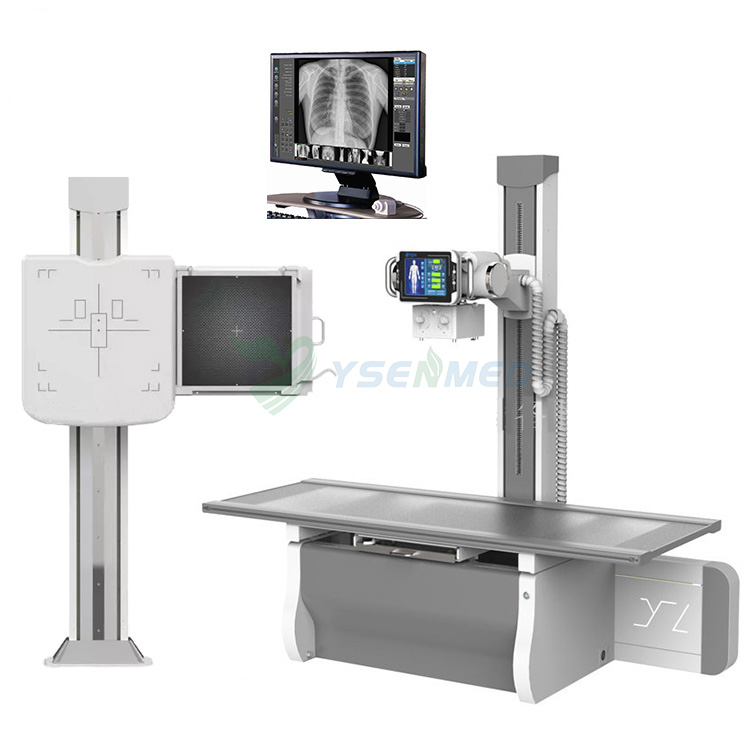
Hospital procurement committees and radiology department directors increasingly favor X Ray Machine Manufacturers that hold valid ISO certification when planning new installations, fleet replacements, or system upgrades. Choosing ISO-certified X Ray machine manufacturers has become a standard practice because certification directly correlates with predictable quality outcomes, smoother regulatory inspections, and reduced long-term operational risks. This article explains why hospitals prefer ISO-certified X Ray machine manufacturers, detailing the tangible advantages that certification brings to clinical reliability, patient safety, staff confidence, and departmental efficiency. Moreover, Ysenmed continues to earn recognition among hospital X Ray machine manufacturers with certifications by maintaining active ISO 13485 certification alongside practical engineering focused on durability, workflow integration, and accessible technical support.
Regulatory Acceptance and Accreditation Advantages
Healthcare accreditation bodies (Joint Commission, JCI, national health authorities) routinely examine supplier quality systems during hospital surveys. Facilities that source equipment from ISO-certified X Ray machine manufacturers present clear, up-to-date documentation that demonstrates due diligence in vendor selection.
Moreover, auditors accept ISO 13485 certificates as strong evidence of structured risk management, design controls, production traceability, and post-market surveillance. However, non-certified suppliers often trigger additional scrutiny, extended documentation requests, or corrective action plans. Therefore, working with certified manufacturers simplifies accreditation cycles and reduces administrative burden on quality and compliance teams.
Additionally, many national reimbursement authorities and insurance payers now reference ISO compliance in their provider qualification criteria. Hospitals that standardize on certified X Ray equipment manufacturers streamline reimbursement approvals and avoid delays in payment cycles.
Consistent Manufacturing Quality and Fewer Field Issues
ISO 13485 requires manufacturers to implement formal design verification, validation, and change-control processes. These controls significantly reduce the likelihood of latent defects reaching clinical environments.
Furthermore, certified manufacturers maintain detailed production records, traceability matrices, and batch-level documentation. Therefore, when a field issue does occur, root-cause analysis and corrective actions proceed much faster. On the other hand, non-certified suppliers frequently struggle to provide complete traceability data, prolonging resolution times and increasing exposure to repeat failures.
Hospitals report noticeably lower unplanned downtime and fewer repeat service calls when standardizing on compliant X Ray machine manufacturers that operate under mature quality management systems.
Enhanced Patient Safety Through Structured Risk Management
ISO 13485 mandates comprehensive risk management throughout the product lifecycle (aligned with ISO 14971). Manufacturers must identify hazards, estimate risks, implement controls, and verify effectiveness.
Moreover, these risk-management files become valuable during hospital risk assessments and incident investigations. Radiology departments can reference the manufacturer's risk file when justifying equipment choices to internal safety committees or external auditors. Therefore, sourcing from medical imaging manufacturers with ISO certification strengthens the hospital's overall patient safety narrative.
Additionally, certified suppliers typically embed risk controls directly into system design—automatic exposure termination, collision sensors, dose-index alerts, and fail-safe mechanisms. Consequently, frontline staff benefit from inherently safer equipment that aligns with ALARA principles and modern radiation protection guidelines.
Smoother Regulatory Inspections and Post-Market Surveillance
When national regulatory authorities conduct unannounced inspections or review adverse event reports, auditors routinely ask for supplier quality documentation. Hospitals that purchase from ISO certified medical x ray machine suppliers can quickly produce current certificates, audit summaries, and post-market surveillance summaries.
Furthermore, certified manufacturers maintain formal vigilance systems that promptly investigate complaints, trend analysis, and corrective/preventive actions. Therefore, hospitals experience fewer follow-up inquiries and reduced administrative workload during regulatory interactions.
On the other hand, non-certified suppliers often lack formalized post-market processes, leading to incomplete responses and prolonged regulatory scrutiny. Consequently, working with certified manufacturers protects the facility from avoidable compliance escalations.
Reliable Spare Parts Availability and Faster Repairs
ISO 13485 requires manufacturers to establish controls for purchased components and to maintain traceability throughout the supply chain. These requirements translate into more predictable spare-parts availability compared to non-certified manufacturers.
Moreover, certified suppliers typically implement formal obsolescence management programs and provide advance notifications of component discontinuations. However, they also maintain longer-term parts stocking commitments for critical sub-assemblies. Therefore, radiology departments experience shorter repair times and fewer situations where a system remains offline waiting for unavailable components.
Additionally, many X Ray machine manufacturers with high-quality digital systems use common modular components across product families. This parts commonality further improves availability and reduces inventory costs for multi-site health systems.
Transparent Software Update and Cybersecurity Practices
Cybersecurity has become a mandatory consideration for connected medical devices. ISO 13485-certified manufacturers must address information security risks as part of their risk-management process.
Moreover, reputable suppliers now publish regular software update bulletins, security patch summaries, and vulnerability disclosure timelines. However, they also provide clear guidance on secure configuration, network segmentation, and user access controls. Therefore, hospitals can maintain current threat protection without excessive manual intervention.
Additionally, certified manufacturers typically offer structured software lifecycle programs that include feature enhancements, bug fixes, and security patches for many years after initial release. Consequently, radiology departments avoid the rapid obsolescence that sometimes affects non-certified products.
Comparison Table: Certified vs Non-Certified Supplier Characteristics
The table below contrasts typical behaviors and outcomes observed when hospitals standardize on ISO-certified X Ray machine manufacturers versus non-certified alternatives.
| Evaluation Dimension |
ISO-Certified Manufacturers |
Non-Certified Manufacturers |
Typical Hospital Impact |
| Regulatory Documentation |
Current certificates, audit summaries available |
Often missing or expired documentation |
Faster accreditation & reimbursement |
| Design & Production Traceability |
Full batch-level records, change control |
Incomplete or ad-hoc records |
Quicker root-cause analysis |
| Spare Parts Availability |
Regional depots, long-term stocking commitments |
Frequent backorders, short notice obsolescence |
Shorter repair times |
| Software & Security Updates |
Structured release cadence, vulnerability disclosures |
Irregular or no updates |
Better cybersecurity posture |
| Post-Market Surveillance |
Formal complaint handling, trend analysis |
Limited or reactive processes |
Fewer repeat issues |
| Risk Management Integration |
ISO 14971-aligned files available |
Minimal or no formal risk files |
Stronger patient safety justification |
| Reference Site Reliability |
Consistent uptime & service feedback |
Variable or reluctant references |
More predictable performance |
This comparison highlights why hospitals increasingly standardize on certified X Ray equipment manufacturers for sustained operational reliability.
Practical Steps for Engaging Certified Manufacturers
Follow this proven sequence when evaluating X Ray machine manufacturers with high-quality digital systems and top features of reliable X Ray machine manufacturers.
- Form a cross-functional selection team (radiology leadership, senior technologists, biomedical engineering, IT, compliance/quality, finance/procurement).
- Document current examination volumes, projected growth, specialty mix, and infrastructure constraints (room size, power, IT readiness, shielding status).
- Develop a weighted scoring matrix reflecting institutional priorities (example: 30% service/support, 25% technology maturity, 20% compliance, 15% portfolio breadth, 10% lifecycle considerations).
- Issue a formal request for information (RFI) to 5–8 qualified manufacturers requesting current ISO certificates, technical specifications, service-level templates, and reference contacts.
- Arrange live technical demonstrations and site visits to reference installations operating under similar conditions.
- Conduct structured reference calls using standardized questions focused on uptime, service responsiveness, image quality stability, and software update satisfaction.
- Negotiate comprehensive service agreements, training commitments, and upgrade paths before finalizing contracts.
Ysenmed frequently scores highly in these structured evaluations by maintaining active ISO 13485 certification, responsive regional teams, and practical platforms that grow with departmental requirements.
Implementation and Post-Installation Success Factors
Successful projects begin with thorough site preparation and multidisciplinary planning involving radiology, biomedical engineering, IT, and facilities management.
Moreover, comprehensive initial and ongoing staff training occurs before and after go-live. However, phased implementation strategies minimize disruption in high-volume departments. Therefore, departments return to full productivity quickly while preserving diagnostic confidence.
Furthermore, establish preventive maintenance schedules strictly aligned with manufacturer recommendations. Regular quality-assurance testing, detector calibration, and dose audits ensure continued performance and regulatory compliance.
Consequently, well-managed installations deliver sustained return on investment through higher equipment availability, improved radiologist satisfaction, and reliable diagnostic quality.
In conclusion, hospitals prefer ISO-certified X Ray machine manufacturers because certification correlates strongly with predictable quality, faster regulatory acceptance, better spare-parts availability, structured cybersecurity practices, and stronger long-term partnership reliability. By partnering with manufacturers like Ysenmed that maintain active certification while focusing on practical, durable, and upgradeable systems, radiology departments secure imaging platforms that support excellent patient care for many years while adapting to evolving clinical and regulatory requirements.
FAQ
Why hospitals prefer ISO-certified X Ray machine manufacturers centers on reduced regulatory risk, faster accreditation, better traceability, and more predictable long-term reliability.
What benefits of choosing ISO-certified X Ray machine manufacturers stand out?
Benefits of choosing ISO-certified X Ray machine manufacturers include smoother inspections, quicker issue resolution, stronger patient safety justification, and improved spare-parts availability.
Which ISO-certified X Ray machine manufacturers for hospitals perform consistently?
ISO-certified X Ray machine manufacturers for hospitals combine active certification with durable design, regional service coverage, and practical upgrade paths.
Who are top ISO-certified X Ray machine manufacturers in the healthcare industry?
Top ISO-certified X Ray machine manufacturers in the healthcare industry maintain mature quality systems, transparent post-market processes, and responsive technical support.
How ISO certification impacts X Ray machine quality and safety?
How ISO certification impacts X Ray machine quality and safety manifests through structured risk controls, consistent manufacturing processes, and reliable post-market surveillance.